Trees, long term
Posted April 24, 2026
How we’re working in the woods of the Shaker Parklands, Doan Brook Restoration at Horseshoe Park
To properly realign Doan Brook to its historic channels—critical to the long-term stability of the stream once the failing ONDR-classified Class I High Hazard dam is removed—our plan includes the removal of 1,000 trees and the planting of 1,100 more.
The relationship between a stream restoration and its tree canopy is balanced in every Regional Stormwater Management Program project the Sewer District designs. In the Doan Brook Restoration at Horseshoe Park project specifically, we assessed more than 3,000 trees on the 60-acre project site; thousands of other trees not impacted within the parklands were not surveyed. The resulting project plan facilitates construction equipment access, keeps as much quality sediment on site as possible, and safely regrades the area so the stream is stable and sustainable, all while minimizing the impact on trees and other natural and historic resources.
This effort included walking the stream and trail alignments in the field to identify opportunities to shift trail and stream alignments and preserve trees where feasible. And during construction, the team will continue to identify any trees that can be protected, instead of removed.
Replanting is a big part of the project plan, not just in Year One but in the decades to follow. The trees in the restored floodplain are the Sewer District’s to manage in perpetuity. Unlike typical construction projects where the structure being installed is the focus and landscaping is secondary, our plantings are integral to the restored stream, which is why we take care of the trees we plant. Revisits, reassessments, and re-plantings benefit the stream and the Doan Brook watershed overall.
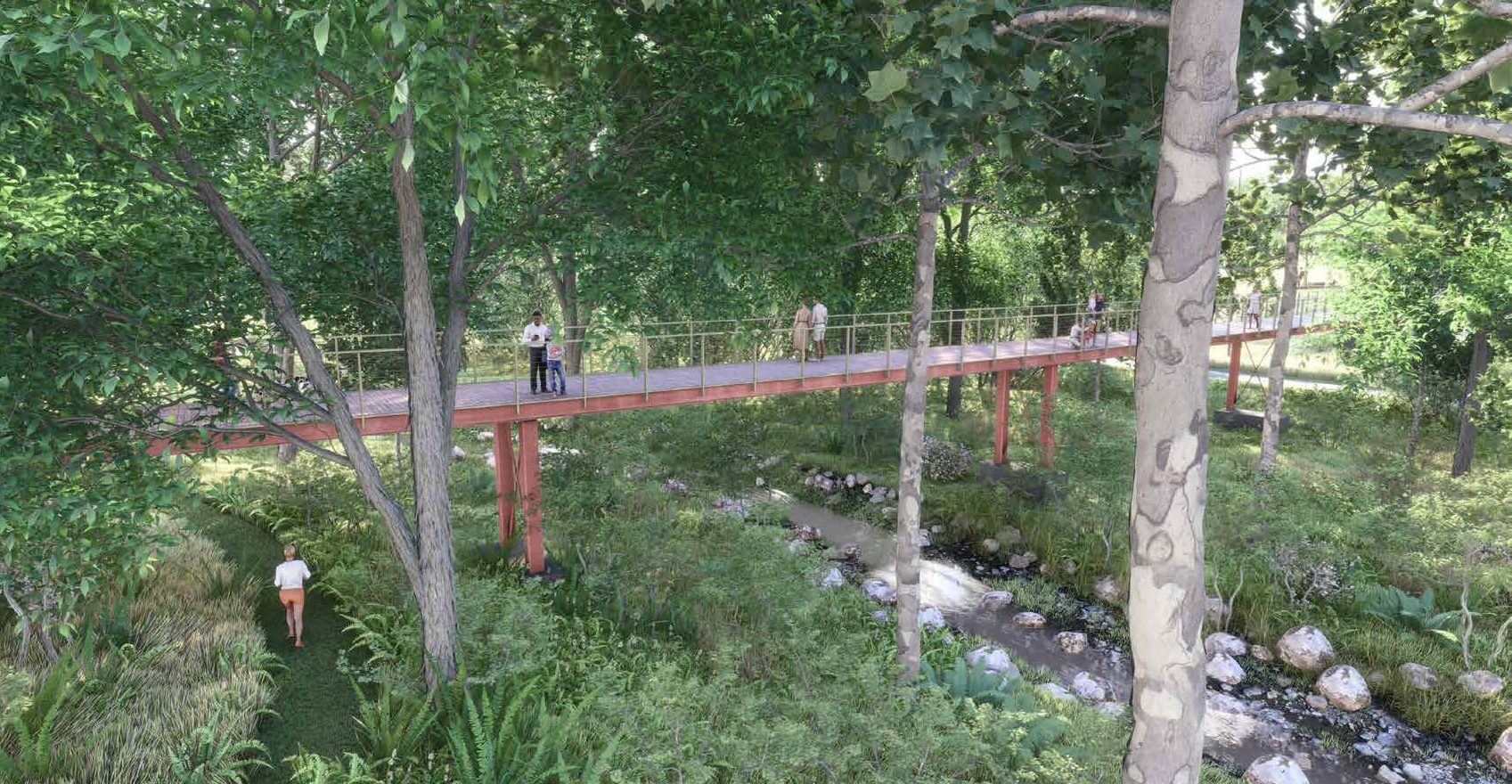
We see restoration projects in the long view, which is why we presented our floodplain planting plan renderings at three future dates: Upon completion, then 25 years out, and finally 50 years out.
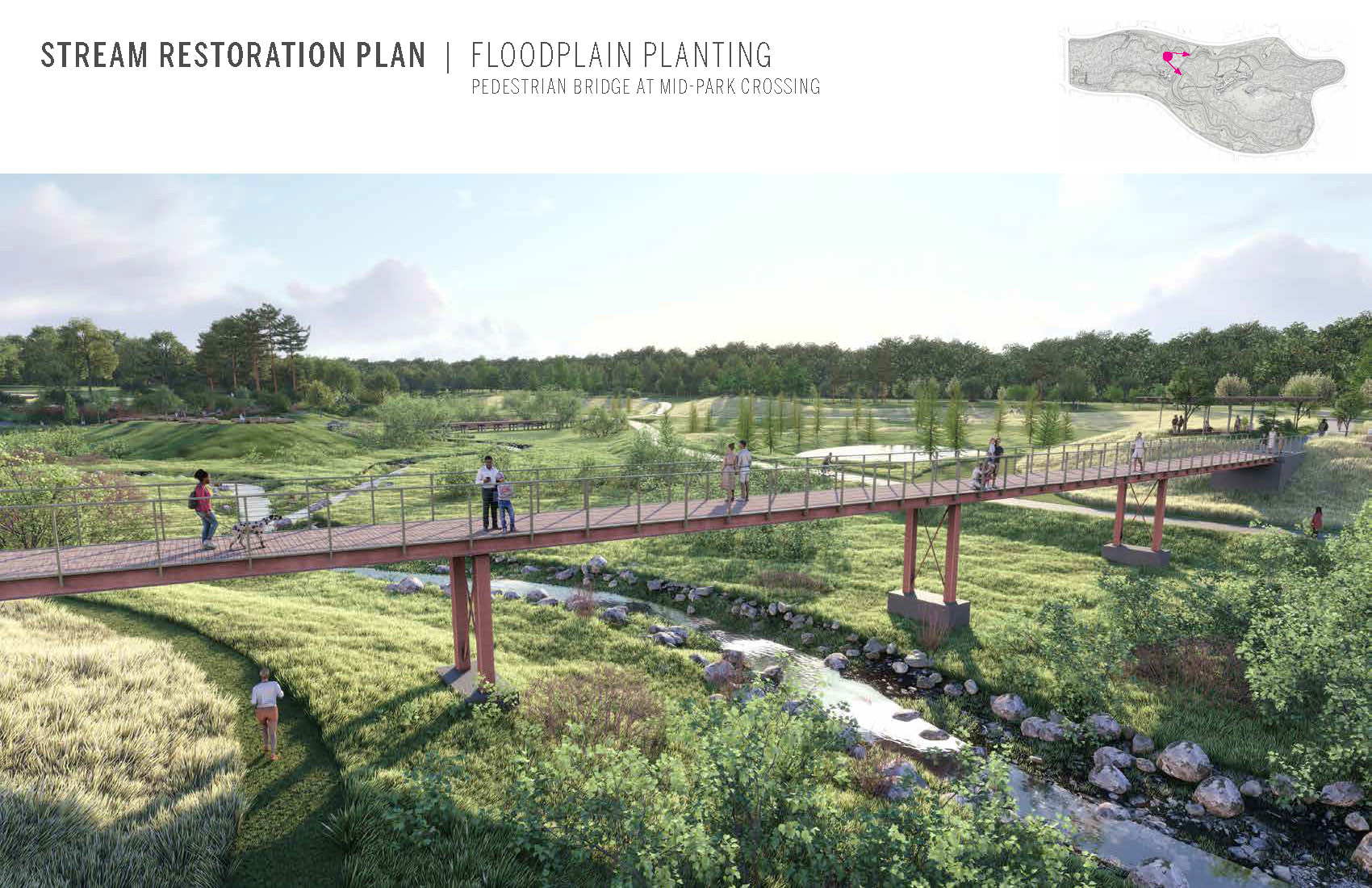
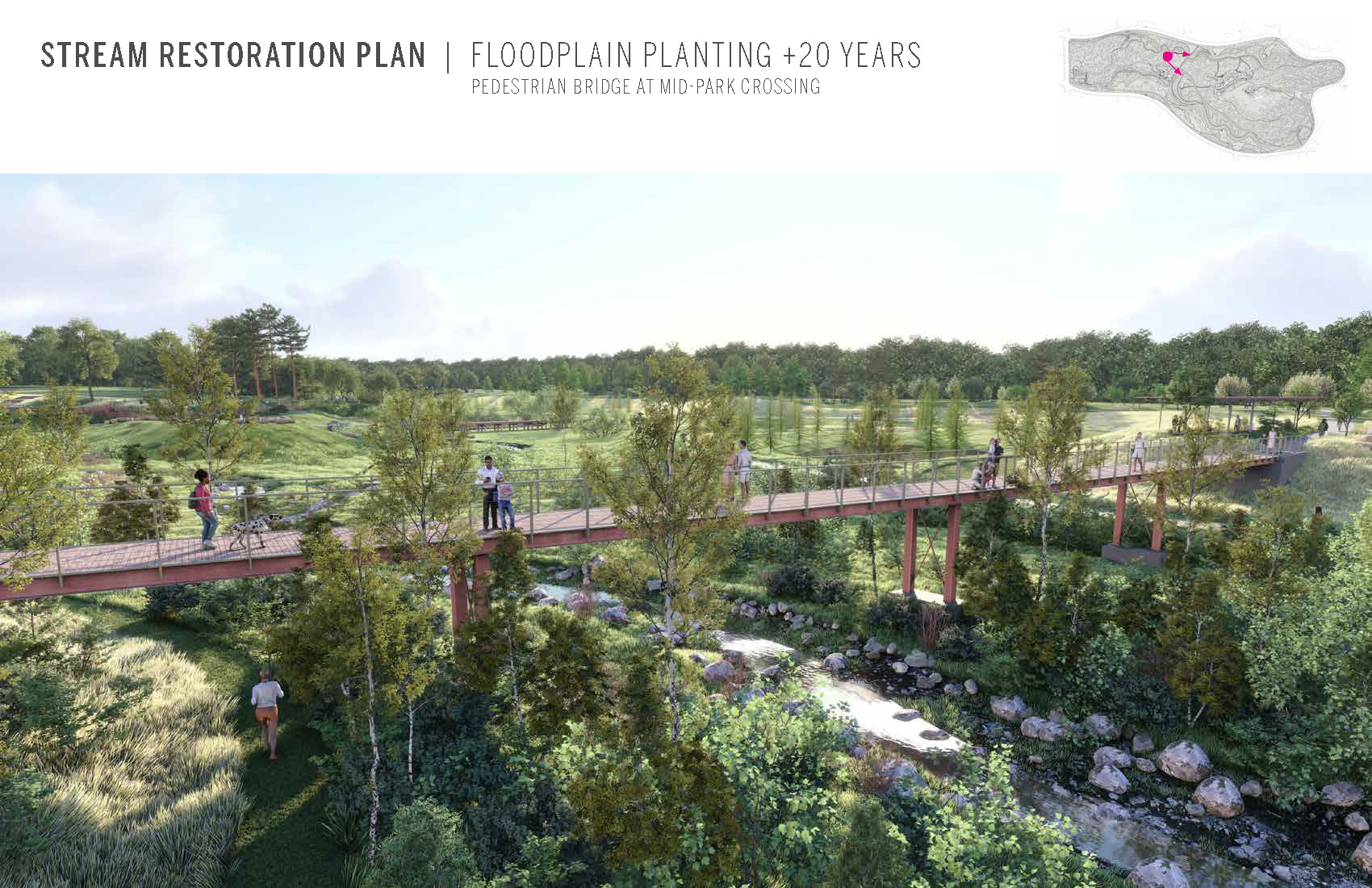
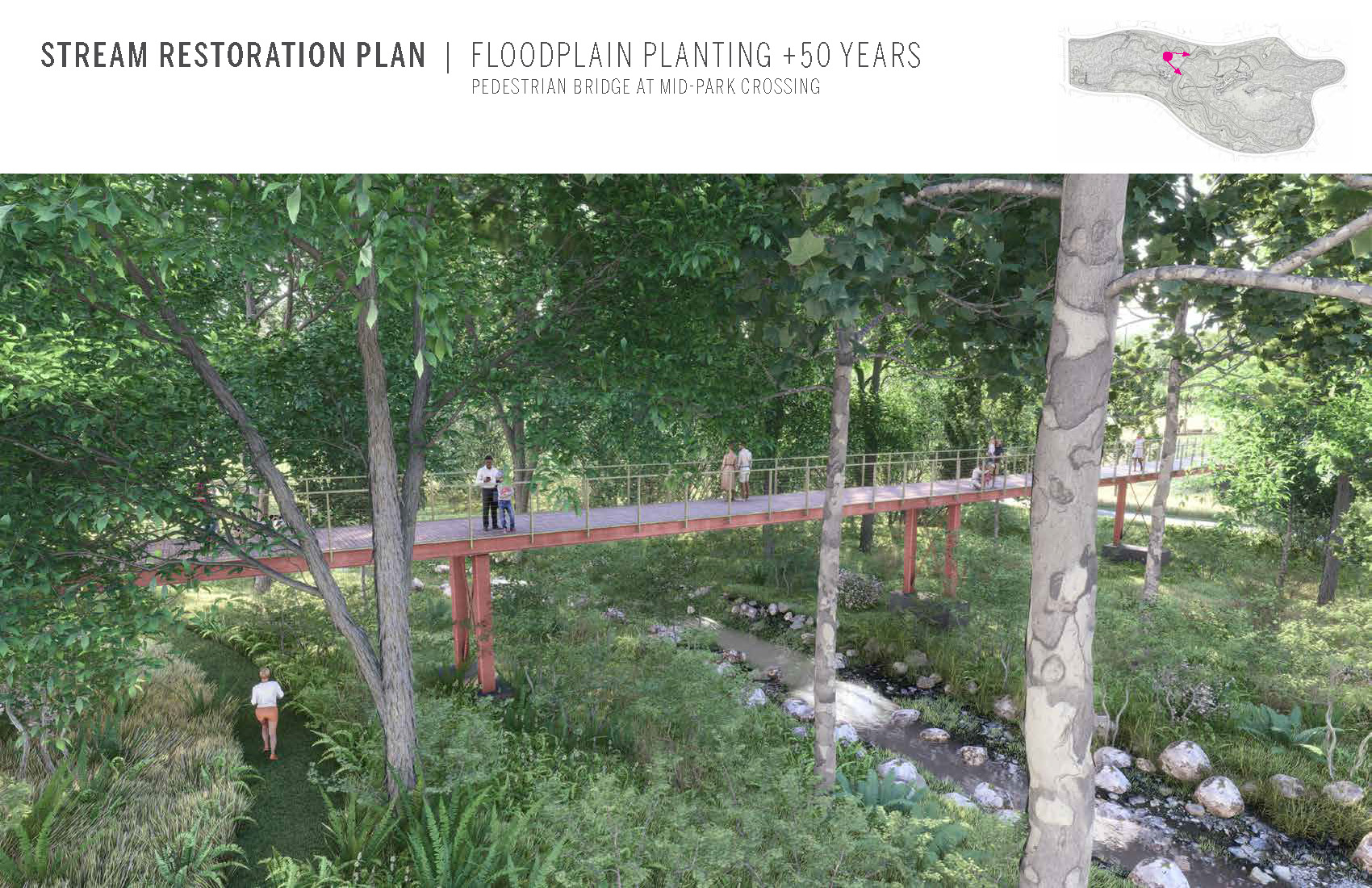
Trees are investments in the present and the future. In urban environments, while we can’t restore streams to their pre-“urban development” natural conditions, we can respect how water wants to move by designing stable solutions that allow a stream and its floodplains to function more naturally — even in urbanized watersheds.
That’s stream restoration.